
Biologically-Inspired Design for Impact on Everyday Life
April 21 - April 23, 2027
Fayetteville, Arkansas
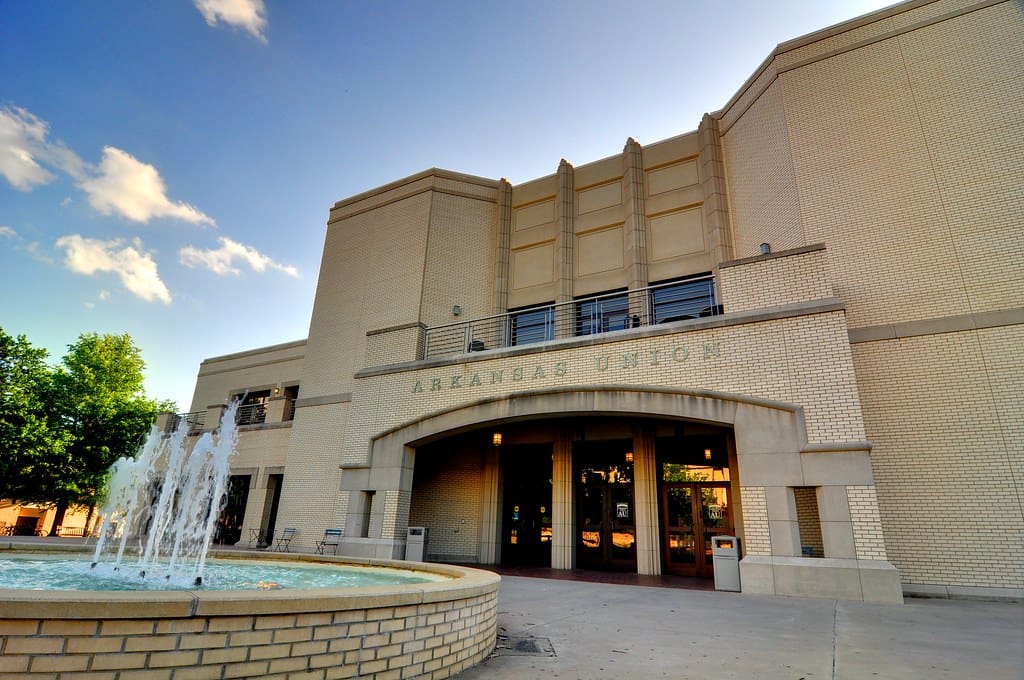
University of Arkansas - Arkansas Union
This year’s theme, “Biologically-Inspired Design for Impact on Everyday Life,” showcases how advances in our field are improving the way people live.
Members save on conference registration. Choose from Student, Associate, Regular, Lifetime, or Corporate membership and start saving before you register.
Share your work at IBE 2027: Innovation through Biological Engineering. Submit for an oral talk in one of our technical sessions (pick the track that best fits your work), or present a poster. Undergrad and grad students can enter posters as general or competition entries to be considered for an award. Entering the Bioethics Competition? Just select that track in EasyChair.
Deadline: February 28, 2027
Secure your spot in Fayetteville, April 21–23, 2027. Register early to get the best rate, and join IBE first to save even more.
Early registration ends March 15, 2027
- Graduate by Hilton: 15-minute walk from conference location
-
Moxy Fayetteville: 15-minute walk from conference location
Technical Sessions
Sustainable Bioderived Fuels, Chemicals, and Materials
This session explores innovative approaches to producing sustainable fuels, chemicals, and materials from renewable biological resources. Topics include biomass conversion, biofuels, biobased chemical production, renewable polymers, biorefinery technologies, and emerging biological pathways for sustainable manufacturing. Contributions addressing process optimization, resource efficiency, life cycle assessment, and the environmental and economic feasibility of biobased alternatives are encouraged. The session aims to highlight advances that reduce dependence on fossil resources and support the development of sustainable industrial technologies.
From Linear to Circular Bioeconomy Systems
This session focuses on transitioning traditional linear production and consumption models toward circular bioeconomy systems that maximize resource utilization, minimize waste, and promote environmental sustainability. Topics include waste valorization, resource recovery, industrial symbiosis, integrated biorefineries, nutrient recycling, and the conversion of agricultural, industrial, and municipal residues into value-added products. Research integrating biological engineering with systems analysis, life cycle assessment, techno-economic evaluation, and sustainable resource management is particularly encouraged. The session seeks to advance innovative strategies for developing resilient and resource-efficient circular bioeconomies.
Biosensors, Sensing, and Diagnostics
This session highlights advances in biosensing technologies for the detection, monitoring, and analysis of biological and chemical targets across healthcare, agriculture, food safety, and environmental applications. Topics include electrochemical, optical, and wearable biosensors; microfluidic and lab-on-a-chip platforms; biomolecular recognition systems; pathogen detection; point-of-care diagnostics; and real-time monitoring technologies. Contributions exploring sensing materials, sensor fabrication, analytical performance, selectivity, sensitivity, and integration with portable or intelligent monitoring systems are encouraged. The session emphasizes the development of reliable, accessible, and scalable technologies for rapid and accurate detection.
Biological Engineering Education
This session explores innovative educational strategies, teaching methodologies, and experiential learning approaches that prepare the next generation of biological engineers. Topics include curriculum development, laboratory instruction, interdisciplinary education, project-based learning, capstone design, undergraduate research experiences, and integration of emerging technologies into engineering education. Contributions addressing student engagement, assessment of learning outcomes, workforce development, and partnerships between academia and industry are encouraged. The session promotes the exchange of effective practices that strengthen biological engineering education and prepare students to address complex scientific and societal challenges.
Biological Systems Modeling & The Role of AI in Biological Engineering
This session highlight computational approaches and artificial intelligence technologies for understanding, predicting, and optimizing biological systems. Topics include mathematical modeling, computational simulation, machine learning, deep learning, digital twins, systems biology, multiscale modeling, and data-driven optimization. Applications may span biological processes, cellular systems, biomanufacturing, agriculture, environmental systems, and healthcare technologies. Contributions that integrate experimental data with computational models, improve predictive capabilities, or demonstrate the responsible application of AI to biological engineering challenges are particularly encouraged.
Tissue & Cellular Engineering
This session focusses in engineering approaches to understanding, manipulating, and reconstructing biological tissues and cellular systems for biomedical and biotechnological applications. Topics include tissue regeneration, stem cell engineering, organoids, cell culture technologies, bioprinting, tissue scaffolds, organ-on-a-chip systems, and cell–material interactions. Contributions investigating cellular responses, tissue development, biomimetic environments, and innovative approaches for regenerative medicine are encouraged. The session highlights advances that bridge fundamental cellular biology with engineering strategies to improve human health and develop functional biological systems.
Synthetic Biology and Metabolic Engineering
This session explores the design, modification, and optimization of biological systems to achieve desired functions and produce valuable biological products. Topics include genetic circuit design, genome editing, metabolic pathway engineering, microbial cell factories, engineered microorganisms, protein engineering, and computational tools for biological design. Contributions addressing strain development, biosynthetic pathway optimization, sustainable bioproduction, and emerging applications in healthcare, agriculture, and environmental biotechnology are encouraged.
Biomanufacturing & Bioprocessing
This session highlights advances in biological production systems and the development, optimization, and scale-up of bioprocesses for industrial and biomedical applications. Topics include microbial and mammalian cell cultivation, fermentation technologies, bioreactor design, downstream processing, process monitoring, bioprocess control, and continuous manufacturing. Contributions examining process intensification, automation, digitalization, product quality, scalability, and techno-economic performance are encouraged.
Bioenvironmental Engineering
This session addresses the application of biological engineering principles to environmental protection, pollution prevention, and sustainable management of natural resources. Topics include water and wastewater treatment, bioremediation, environmental microbiology, nutrient recovery, contaminant detection and removal, biological waste treatment, and ecosystem restoration. Contributions exploring emerging contaminants, microbial treatment systems, nature-based solutions, environmental monitoring, and technologies that improve water, soil, and environmental quality are encouraged. The session emphasizes innovative engineering solutions that strengthen environmental resilience and protect ecological and public health.
Biomaterials & Biomimetics + Biological Engineering for Health and Safety
This session explores the design and application of biological and bioinspired materials and engineering technologies that improve human health, safety, and well-being. Topics include biomaterials development, bioinspired structures, tissue-compatible materials, antimicrobial surfaces, drug delivery systems, biomedical devices, and biological technologies for health protection. Contributions addressing material biocompatibility, functional performance, biosafety, injury prevention, and applications in clinical, occupational, agricultural, and environmental health are encouraged.
Food science and Engineering
This session will cover a wide range of research and industrial application interests in food engineering, including but not limited to postharvest, processing, and preservation. Innovations in novel technologies (thermal and non-thermal), technologies for novel value-added products, novel automation and control systems, sensors for food quality and safety (e.g., hyperspectral sensors and wireless IoT-ready sensors), implementation of AI tools, development of digital twins, life cycle assessment of novel technologies, and technologies with potential applications beyond foods are encouraged. This new session aims to foster cross-pollination of ideas among food and biological engineers.